The Basic Principles Of Causey Orthodontics
Table of ContentsCausey Orthodontics for DummiesThe Definitive Guide to Causey OrthodonticsThe smart Trick of Causey Orthodontics That Nobody is DiscussingFacts About Causey Orthodontics RevealedThe Of Causey Orthodontics
Disregarding occlusal relationships, it was regular to get rid of teeth for a range of dental concerns, such as malalignment or overcrowding. The principle of an undamaged dentition was not extensively appreciated in those days, making bite relationships seem unnecessary. In the late 1800s, the idea of occlusion was important for developing trustworthy prosthetic replacement teeth.As these ideas of prosthetic occlusion progressed, it ended up being an invaluable device for dentistry. It remained in 1890 that the work and influence of Dr. Edwards H. Angle began to be really felt, with his contribution to modern orthodontics particularly notable. Initially concentrated on prosthodontics, he educated in Pennsylvania and Minnesota prior to guiding his attention in the direction of dental occlusion and the therapies required to maintain it as a regular condition, hence ending up being understood as the "dad of contemporary orthodontics".

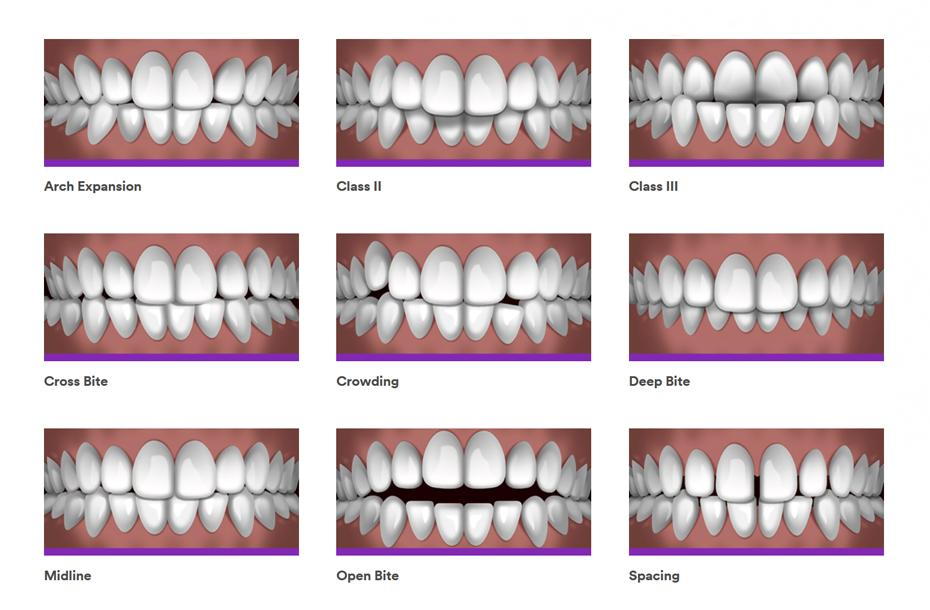
The principle of excellent occlusion, as proposed by Angle and integrated right into a category system, allowed a shift in the direction of dealing with malocclusion, which is any type of discrepancy from normal occlusion. Having a complete set of teeth on both arches was very demanded in orthodontic treatment as a result of the requirement for exact partnerships in between them.
All about Causey Orthodontics
As occlusion came to be the crucial top priority, facial percentages and appearances were ignored - affordable orthodontist near me. To achieve excellent occlusals without utilizing exterior forces, Angle postulated that having excellent occlusion was the very best method to gain optimal face visual appeals. With the passing of time, it came to be fairly obvious that also a remarkable occlusion was not suitable when considered from a visual factor of sight
It came to be noticeable that orthodontic treatment might change mandibular advancement, bring about the development of functional jaw orthopedics in Europe and extraoral pressure procedures in the United States. These days, both practical devices and extraoral devices are used around the world with the purpose of amending growth patterns and types. Consequently, pursuing true, or a minimum of improved, jaw relationships had actually become the primary objective of treatment by the mid-20th century.
The Best Strategy To Use For Causey Orthodontics
 Till the mid-1970s, braces were made by wrapping steel around each tooth. https://profiles.xero.com/people/causeyortho7., it became possible to rather bond steel braces to the teeth.
Andrews provided an informative interpretation of the optimal occlusion in long-term teeth. This has had significant results on orthodontic therapies that are carried out regularly, and these are: 1. Appropriate interarchal connections 2. Right crown angulation (idea) 3. Right crown disposition (torque) 4. No turnings 5. Limited get in touch with factors 6. Flat Curve of Spee (0.02.5 mm), and based on these principles, he discovered a treatment system called the straight-wire home appliance system, or the pre-adjusted edgewise system.
The benefit of the style depends on its bracket and archwire mix, which calls for just very little cable bending from the orthodontist or medical professional (affordable orthodontist near me). It's appropriately called after this feature: the angle of the port and density of the bracket base ultimately establish where each tooth is positioned with little requirement for additional adjustment
The 6-Minute Rule for Causey Orthodontics
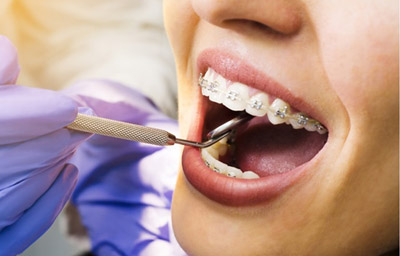
Both of these systems employed the same brackets for each and every tooth and demanded the bending of an archwire in 3 planes for locating teeth in their wanted settings, with these bends determining utmost placements. When it pertains to orthodontic appliances, they are split right into two types: detachable and fixed. Removable appliances can be taken on and off by the client as needed.
Hence, mostly all contemporary set home appliances can be considered variants on this edgewise home appliance system. Early 20th-century orthodontist Edward Angle made a significant contribution to the globe of dentistry. He developed 4 distinct device systems that have actually been utilized as the basis for many orthodontic therapies today, barring a couple of exceptions.
How Causey Orthodontics can Save You Time, Stress, and Money.
The wire finished in a thread, and to relocate onward, an adjustable nut was used, which permitted a boost in area. By ligation, each private tooth was connected to this expansive archwire (family orthodontics). Due to its limited variety of motion, Angle was incapable to accomplish specific tooth positioning with an E-arch
These tubes held a soldered pin, which can be rearranged at each appointment in order to move them in position. Called the "bone-growing device", this device was supposed to motivate much healthier bone growth as a result of its capacity for moving force directly to the origins. Implementing it proved bothersome in reality.